

Cookie consent has quickly become a requirement that website owners across the U.S. and beyond can no longer afford to overlook. With privacy legislation expanding at both the state and federal levels, the question for most businesses is no longer whether a cookie consent banner is needed, but how to implement one correctly.
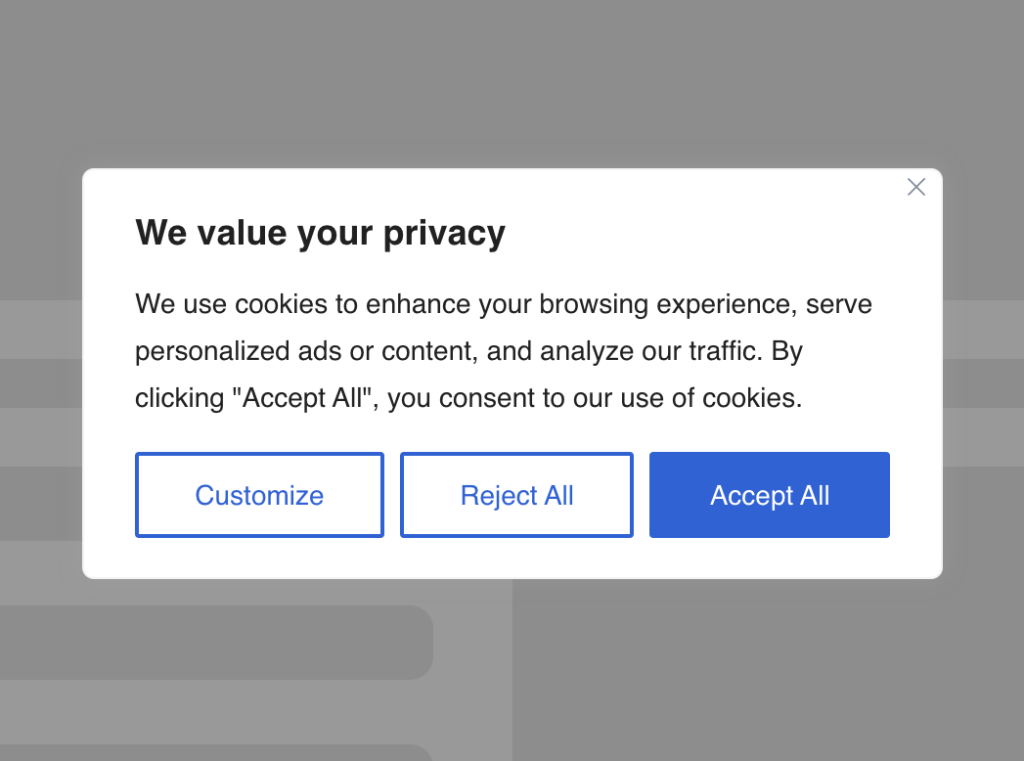
Cookies are small pieces of data stored in a user’s browser when they visit a website. They power everything from keeping a user logged in, to enabling Google Analytics to track sessions to allowing ad platforms like Google Ads and Meta to attribute conversions.
Cookie consent refers to informing users that your website uses cookies and, in many cases, giving them control over whether non-essential cookies are allowed to run. A cookie consent banner is how that notice is delivered, and user preferences are collected.
A growing number of jurisdictions have passed privacy legislation requiring websites to provide users with notice about data collection and, in some cases, obtain consent before tracking begins. These laws apply to any website that serves users in a given region, not just businesses physically located there.
For U.S.-based businesses, this means visitors from states like California, Colorado, and Virginia may be covered under laws that require action on your part, regardless of where your company is headquartered. Failing to address cookie consent can expose your business to legal risk, including demand letters and regulatory scrutiny.
One of the most important things to understand is that cookie consent rules are not the same everywhere. Applying a single global policy to all visitors without accounting for regional differences will either result in unnecessary data loss or leave you out of compliance in stricter regions.
Here is how the major regulatory frameworks break down:
Under GDPR, non-essential tracking cookies cannot run until a user has actively opted in. Tracking is blocked by default. If your website receives traffic from the EU or UK, GDPR applies to those visitors regardless of where your business is based. The UK enforces similar requirements through its own Privacy and Electronic Communications Regulations (PECR), overseen by the Information Commissioner’s Office (ICO).
Canada’s Personal Information Protection and Electronic Documents Act (PIPEDA) similarly requires meaningful prior consent before non-essential cookies are deployed. An opt-in consent approach is the appropriate standard for Canadian visitors.
This is where the most common misunderstandings occur. While a growing number of states, including California, Colorado, Connecticut, Virginia, Texas, Oregon, and Montana, have enacted privacy legislation, the majority of these laws operate under an opt-out framework, not an opt-in. Under an opt-out model, tracking may run by default, but users must be given a clear way to opt out of the sale or sharing of their data. A “Do Not Sell or Share My Personal Information” link is typically required, and websites must honor Global Privacy Control (GPC) signals from a user’s browser.
California’s CCPA and CPRA, enforced by the California Office of the Attorney General, are the most widely referenced U.S. state laws and serve as a good benchmark for understanding what opt-out compliance looks like in practice.
Many U.S. states and regions globally have no cookie-specific legislation in effect. In these areas, no consent banner is required, and standard tracking can run without restriction.
Blocking all tracking by default until a user opts in may seem like the safe move, but it comes with real consequences.

Analytics data drops significantly. Users who ignore the banner or click “Reject” generate no trackable data, resulting in an immediate and meaningful drop in reported sessions, conversions, and user behavior.
Ad performance metrics become unreliable. When cookies are blocked by default, tracking pixels stop reporting back to platforms like Google Ads, Meta, and Microsoft Ads. Reported cost-per-conversion rises, not because campaigns are underperforming, but because the data to measure them accurately is missing.
Retargeting audiences shrink. Ad platforms build retargeting audiences from pixel data. An opt-in-only setup significantly reduces the pool of users available for audience-based targeting.
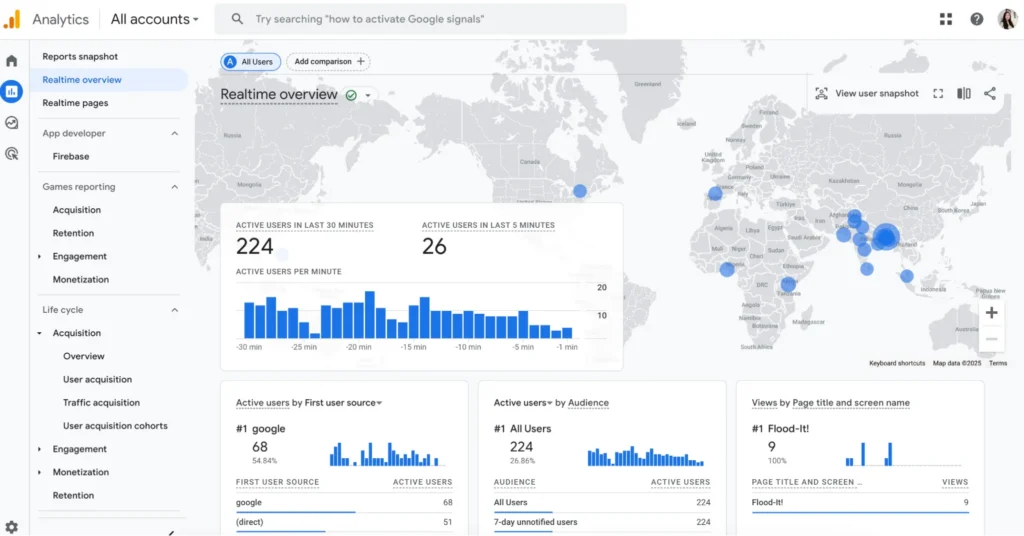
You restrict data you have every right to collect. In states and regions with no applicable legislation, blocking cookies is not a legal requirement. It is simply lost data.
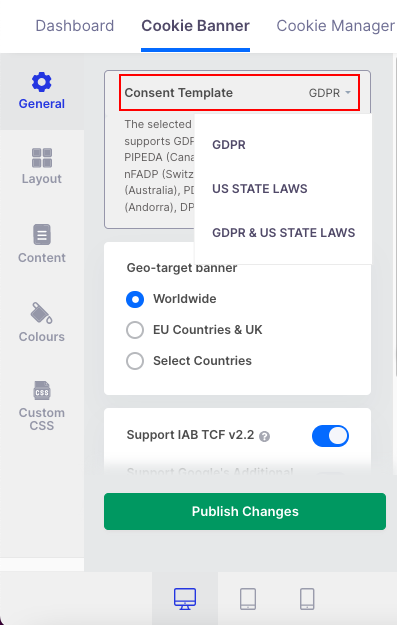
Rather than applying one policy globally, we recommend implementing cookie consent through a platform that supports geographic targeting. This allows you to serve the appropriate consent experience based on each visitor’s location, keeping you compliant everywhere while preserving as much usable data as possible.
EU, UK, and Canada: Opt-in banner. Tracking is blocked by default until the user accepts.
U.S. states with opt-out laws: Opt-out banner. Tracking runs by default, but users are given a clear option to opt out, with a “Do Not Sell or Share My Personal Information” link accessible at all times.
All other regions: No banner required. Tracking runs normally.
For most U.S.-focused businesses, this means the majority of your traffic continues to be tracked as it always has been, while your consent setup properly handles the regions that require more.
To execute a geo-targeted strategy, you need a dedicated consent management platform (CMP). The built-in cookie settings that come with most website builders and e-commerce platforms are not equipped for this level of configuration.
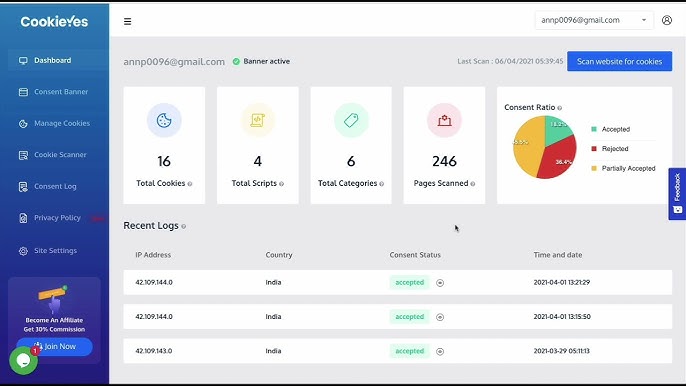
We recommend and have experience implementing CookieYes for clients across a range of industries. CookieYes supports geographic targeting at the country and U.S. state level, integrates with Google Tag Manager, scans and categorizes cookies on your site, and covers GDPR, CCPA, CPRA, and other major regulations. Their documentation covers CCPA and CPRA compliance as well as GDPR requirements in detail. The Pro plan at $25 per month is the minimum tier needed for geo-targeting and is what we recommend for most clients.
Script load order matters. The CookieYes script must load before your Google Tag Manager snippet in the site header. If GTM initializes first, tracking tags can fire before any consent logic has been applied.
Test your configuration. Use a tool like Google Tag Assistant to confirm that tracking is being blocked when a user declines and firing correctly when they accept.
Categorize all cookies. CookieYes will flag any cookies it cannot categorize during a site scan. These should be reviewed and either categorized or blocked before consent. An uncategorized cookie firing after a user has declined is a gap in your compliance.
Involve your legal team. The technical configuration is something your digital marketing team can handle, but decisions about which regions require which treatment should involve qualified legal counsel. Cookie regulations are evolving, and your setup needs to stay current as new laws take effect.
California’s CPRA operates under an opt-out framework and does not require that tracking be blocked by default. It requires clear notice, the ability to opt out of data sharing, and that GPC signals are honored.
Some organizations implement opt-in consent for California on the guidance of their legal teams as a conservative measure. This is a valid approach, but California is consistently one of the highest-traffic states for U.S. advertisers, and an opt-in configuration will meaningfully reduce trackable conversions and ad attribution from that market. If opt-in is implemented in California, we recommend creating a dedicated California campaign with performance expectations that account for reduced tracking visibility, rather than leaving it in a broader national campaign where data gaps will skew overall reporting.
If your website does not yet have a cookie consent banner in place, or if you have one but are unsure whether it is configured correctly, the Bytes.co digital marketing team can help. We have experience implementing and configuring CookieYes for clients across a range of industries and website platforms.