
Clients aren’t simply purchasing website maintenance. They’re purchasing expertise, accountability, and coordinated response when vulnerabilities emerge.
Welcome to a whole new era of the Internet.
You know its real when old friends text you after work to ask about things called PHP and node. “Are you guys being impacted by this website security bull shit on the news?”
On Wednesday, October 21, 2026, Government sites in France, Denmark, Finland and the Netherlands came down, including the Dutch cyber security agency’s own site. Wikimedia pulled systems offline as a precaution. The U.S. National Security Agency issued a rare public warning telling organizations to take websites offline if they couldn’t update right away.
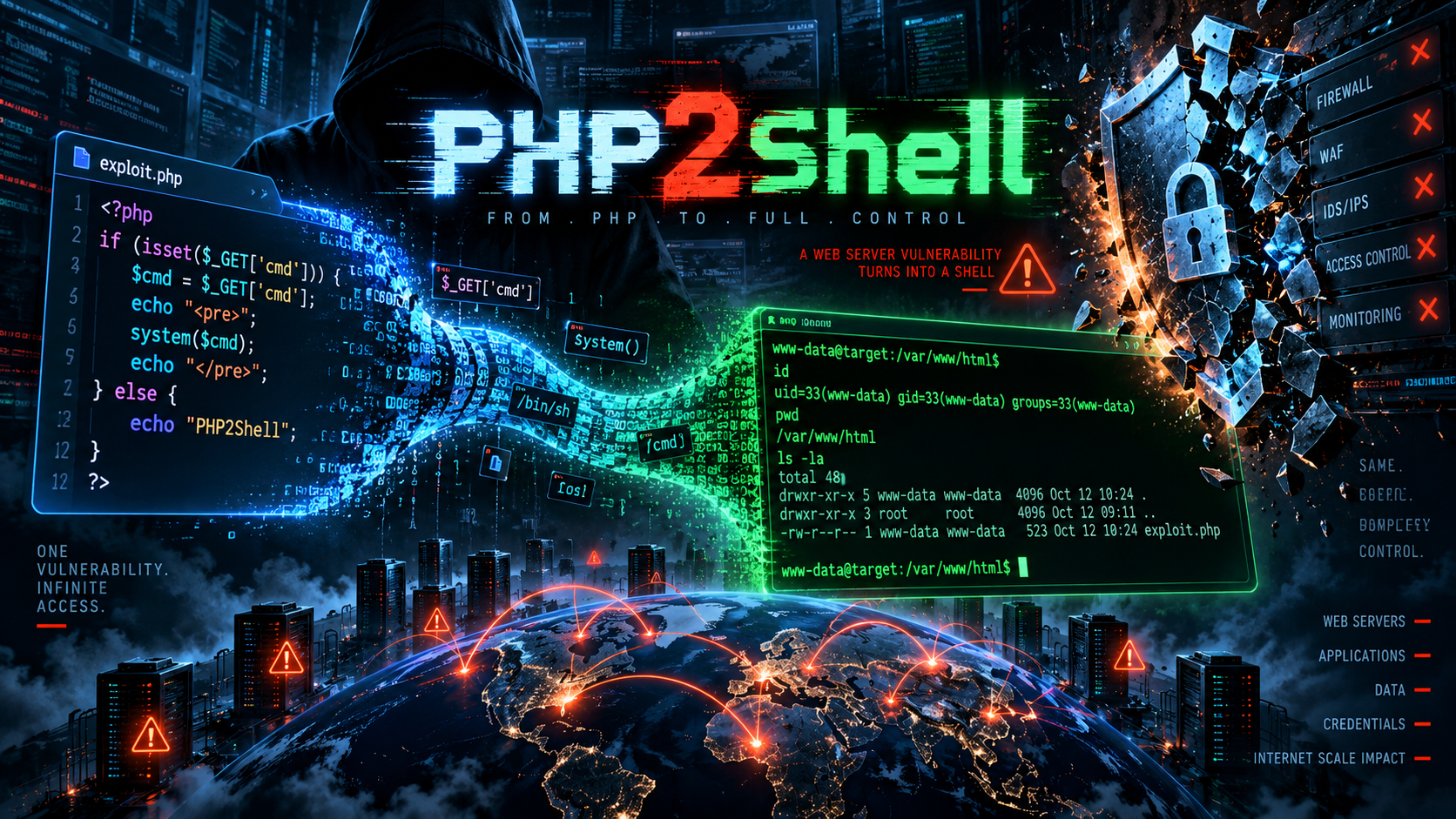
The cause: the PHP2Shell vulnerability, a pair of critical flaws in PHP, the programming language behind just under 70% of websites with a known server-side language. That includes every WordPress site on the planet.
And the flaws weren’t found by a few hackers or cyber terrorist group. They were found by AI.
PHP2Shell lets an attacker exploit problems in how PHP manages memory. PHP’s advisories describe two bugs: one corrupts request data when a server runs out of memory, and the other lets data from one request linger where a later request can use it.
What does that mean? It’s bad.
A hacker could take control of a website’s server without a username or password, then steal sensitive data, disrupt the site, or use it as a foothold to move deeper into a network. Both flaws score 9.2 out of 10 on the CVSS v4.0 severity scale.
The CVE identifiers leaked early, so PHP moved the release up a day. The bad guys were even earlier, though. Amazon Threat Intelligence says its MadPot honeypots, decoy servers built to attract attackers, caught a PHP2Shell exploit attempt on October 17, four days before disclosure! More attempts from several different actors started rolling in around 2 a.m. UTC on October 21, hours before the patch shipped.
These bugs sat in PHP for more than a decade. Researchers at Wiz and Calif found them independently in August using frontier AI models. Wiz says the findings “rank among the most severe vulnerabilities discovered in PHP, and arguably in software history.”
If you thought Project Glasswing was a publicity stunt or science fiction, this is your moment to think again. When Anthropic announced it on April 7 of this year with AWS, Apple, Google, Microsoft and others, the warning was blunt: AI can now outperform all but the most skilled humans at finding and exploiting software vulnerabilities, and that capability will spread.
We are officially seeing the warnings from this past April take shape.
“The window between a vulnerability being discovered and being exploited… has collapsed.”
— Elia Zaitsev, CTO, CrowdStrike, on Project Glasswing
This is precisely the kind of event that shows why professional website management is more than plugin updates, and we lived up to that promise.
Like most agencies with a long Client list that have been around for a while, we manage a lot of different website configurations. Our Client Services team was ready for this one. On the day PHP released its fixes, they worked through every site we manage:
If your site runs on PHP, including WordPress, check these today:
Not sure what PHP version your site runs, or who would have your back when the next one hits? Let’s talk.