
“All those screenshots of slides, and the notes you are taking? You’re never going to use those. Trust me.”
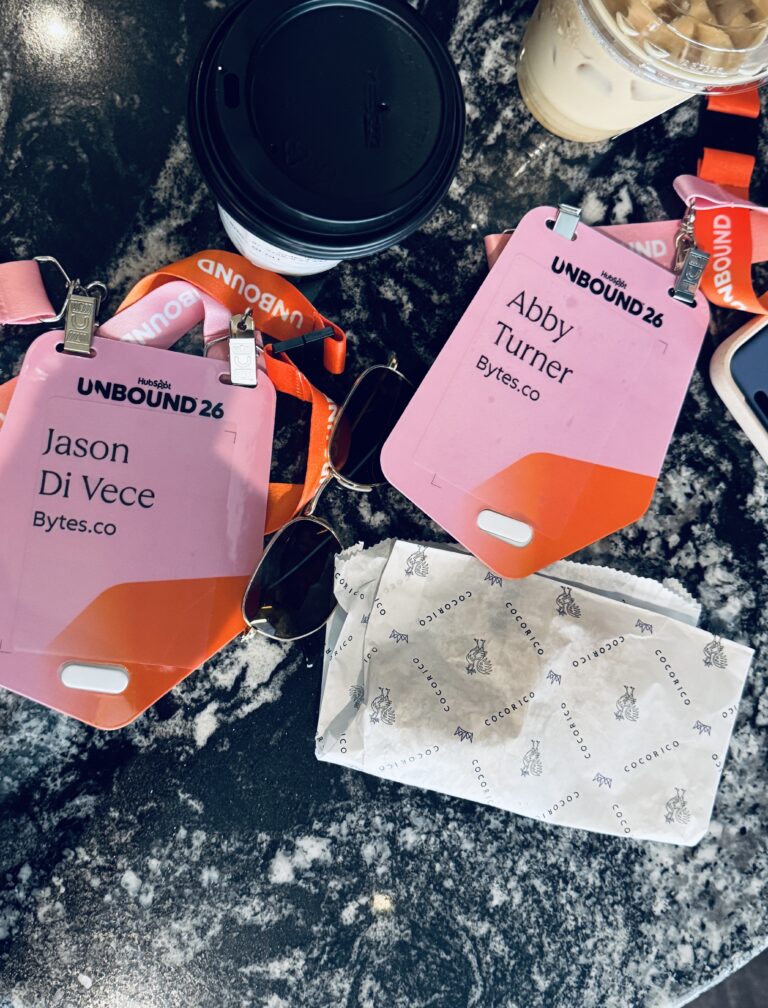
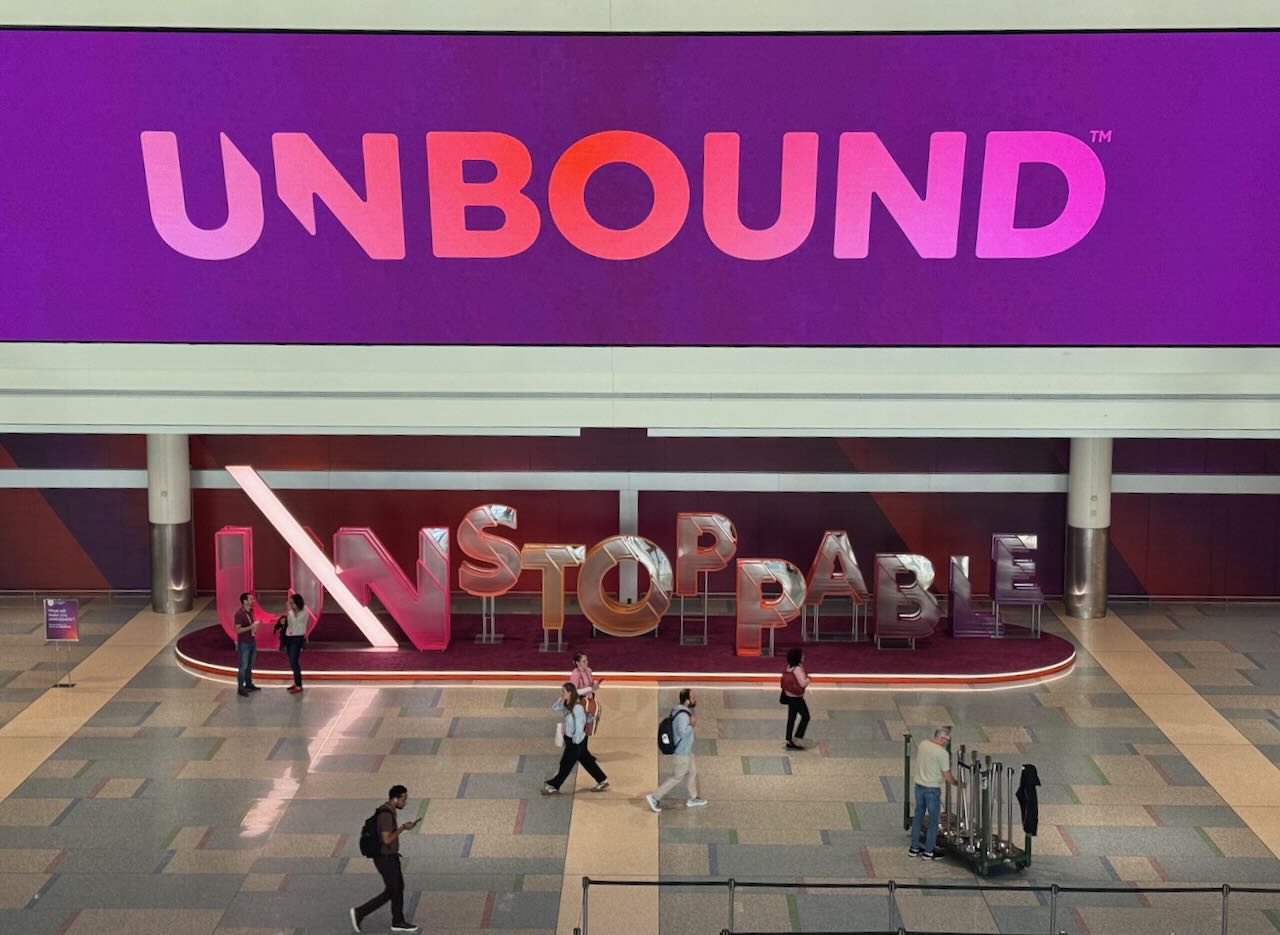
I left Vermont at 4:30am on September 16th for my first ever Inbound / Unbound in Boston; Hubspot’s annual marketing and sales Mecca attracting 13k attendees according to their website. It was a dark, rainy drive until I got about 15 miles from the city when the clouds parted and traffic slowed to a crawl. 45 minutes and five miles to go until the largest industry conference of my professional career.
After waiting almost an hour in line to enter the Thomas M. Menino Convention Center, it was now close to noon and eating was the only thing on my mind. As I wandered through the carnival of convention booths on my way to the Lawn D food trucks, one caught my immediate attention: CallRail. Bytes.co has used CallRail for years to track ROI from different paid / organic campaigns. They were giving away free vinyl records at their “listening station” to promote a new AI listening agent product. This was a must see for me, as a vinyl collector and CallRail customer.
“They probably won all these albums by mistake at a storage unit auction,” I said aloud.
“Yeah they even smell like basement,” the person next to me chimed.
My first conference friend. We chatted so long I forgot to take a product demo.
“Have you been to Inbound / Unbound before?” I asked.
“Oh yes. Several times.”
I asked for advice to give a newcomer like me.
“The sessions can be crap. The audio is usually bad, so you can’t hear people that well, and just don’t spend so much time with them. Walk around and meet people. Then find an after party or networking event to check out”
Partially ignoring this advice, my afternoon was booked with sessions. Here is what stood out to me that afternoon.
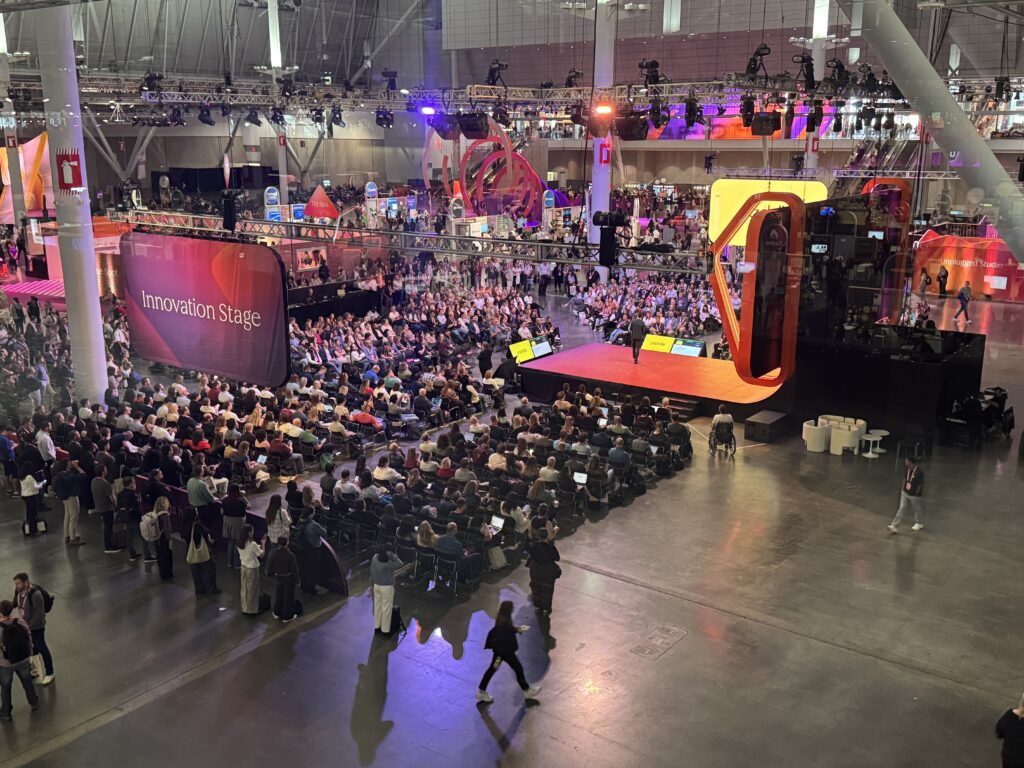
This was all about managing team tension, and the audio was in fact bad. One of the opening slides read: “Change is the destination. Transition is the journey to get there”. One part of this is structural (the plan), and the other, psychological (the people). You cannot drag people into change, you must guide them.
Most Leaders are probably good at the first part (change) and generally bad at the second (transition). We announce a process or organizational change, people are into it, and we feel relieved. Several weeks later, we’re confused when nothing has actually moved.
This session framed that around tension, and laid out what it costs when you misread it:
The first three are all leading indicators of the fourth. By the time team tension shows up in the numbers, it’s been eroding trust and efficiency for months.
Speaker Karen McFarlane included a practical framework for how to manage team tension through feedback loops and stakeholder negotiation that I may unpack in a future post.
Tension is actually good. It challenges you, and forces innovation. The goal is not to have a frictionless organization, but to read tension accurately and use it as an advantage instead of pretending it doesn’t exist.
Karen Mc Farlane
“Passionate fans are your advantage in a world of digital chaos,” said David Meerman Scott from the room 253 stage. Forming a genuine connection with people is what builds fans. This isn’t an aspirational idea. It’s neuroscience. Fans will be your biggest advocate, and will vouch for you even when you’re not in the room. One of many examples David discussed was The Grateful Dead business model. The Dead let concert goers record the live shows, for free, giving away what other major bands at the time treated as theft. The result was that it spread their music into places the band would never otherwise reach, and it created one of the most durable fan bases in music history.
Pete Davidson and Colin Jost just applied this same marketing philosophy with a free comedy show on their decommissioned Staten Island Ferry. Davidson and Jost could easily have charged for tickets and filled the boat, but by dropping free tickets in limited batches instead, they generated a scramble and a wave of buzz worth far more than the low six figures a paid show would have earned. By trading immediate revenue for attention and goodwill, the audience now has a reason to care about whatever they do next with this widely panned ferry project.
It was an incredible presentation from David. My number 1 pick for Unbound ‘26.
“What proprietary content could you offer for free?” David pressed the standing room only crowd. “Do you have any insider details to share? Don’t forget to showcase your most passionate fans, and stop doing what your customers hate. You should not do what your Clients hate.”

~ David Meerman Scott on how to build Fandom in your Organization
Don’t sell. Deliver something. Scaling your marketing with AI… finally something more tactical from Kevin Barber. This one promised more use-cases than a 5 gallon bucket! Buyers now comparison shop instantly with AI. How you show up in those answers today determines whether you are discoverable tomorrow. Winning the “why you” conversation in the AEO era is therefore paramount.
In terms of actual things you can do today to move the marketing needle with AI, there were too many to cram into this single blog post, but here are a few:
One other key takeaway, since it’s football season once again: “AI should get you to the Red Zone, not the end zone.. Aim for those ‘Red Zone’ outputs that are going to get you real close to whatever it is you want, then let a human finish the job.”
**Today I learned that an AI agent harness is the software infrastructure that wraps around an LLM and enables it to act on tasks, not just respond to prompts.
The final keynote of the day was at 5:30pm on the massive main stage. Stomach reeling from the lack of solids, and my head basically ready to explode from it all at this point, I was more ready for dinner and drinks than whatever was up next. You know, I had truthfully never heard of Mel Robbins before today. After that 35 minute talk though, I’ll show up to her church any day of the week!
“You have incredible power to create change: in yourself, in your relationships, in your business. As a Leader, you bring the weather, and no one wants to work in a thunderstorm.”
Mel Robbins